
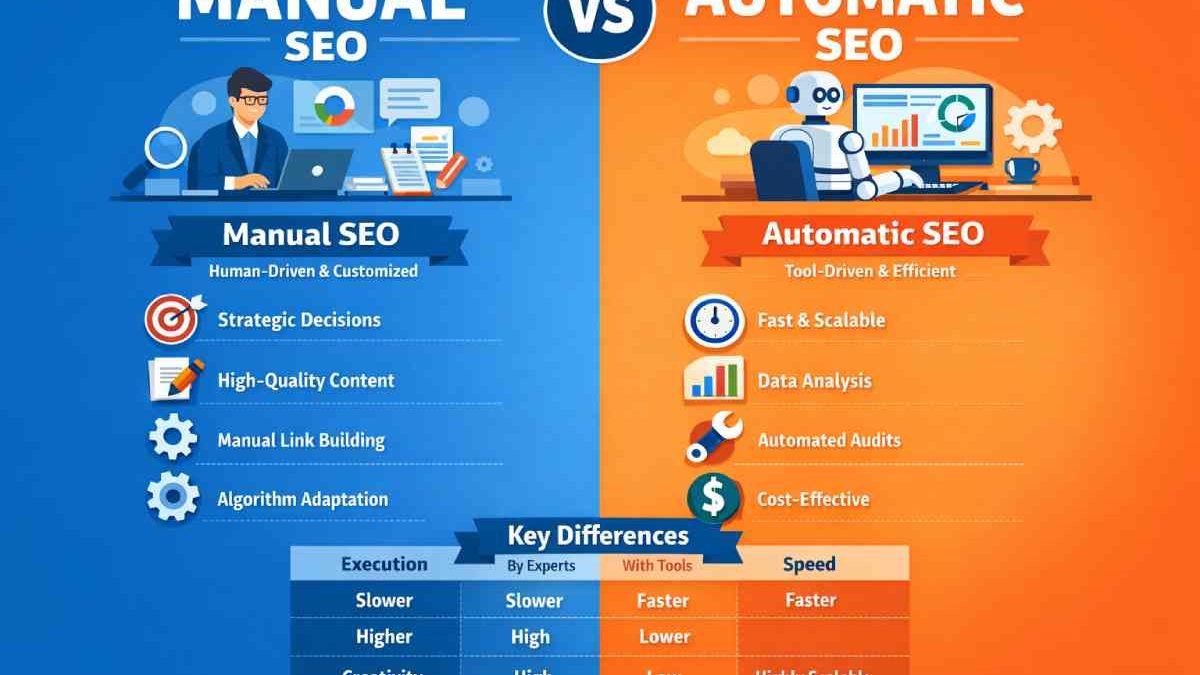
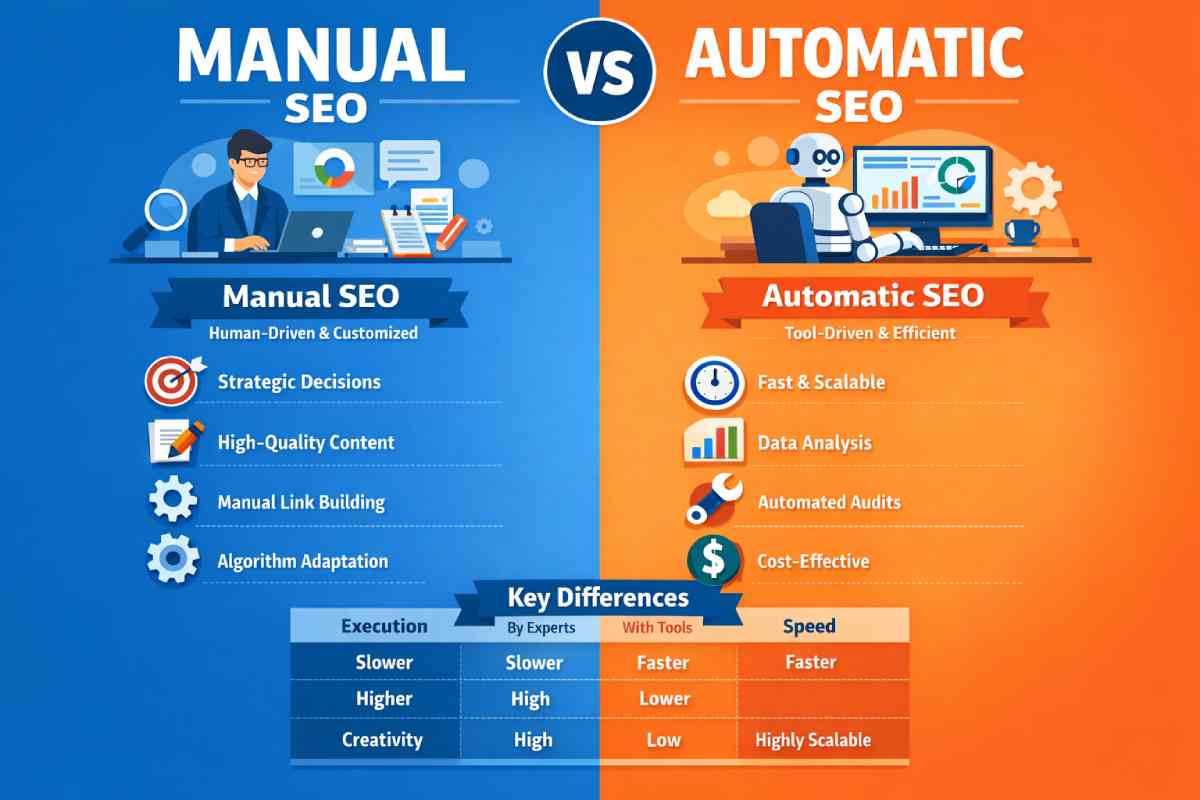
Search Engine Optimization (SEO) is essential for improving website visibility, driving organic traffic, and boosting online authority. As businesses scale their digital efforts, a critical decision arises: should SEO be done manually or automated using tools and software?
This comprehensive guide explores Manual vs Automatic SEO, comparing their strengths, limitations, use cases, and best practices. By the end, you’ll understand which approach suits your strategy—or how to combine both for optimal results.
This Article Belongs to SEO
Table of Contents
What Is Manual SEO?
Manual SEO refers to the process of optimizing a website through human effort, expertise, and strategic decision-making without relying heavily on automation tools. It involves hands-on tasks such as keyword research, content optimization, backlink building, and technical audits performed by SEO professionals.
Unlike automated methods, manual SEO allows for deep customization and adaptability based on algorithm updates from Google and evolving user behavior.
Key Characteristics of Manual SEO
| Feature | Description |
| Human-driven | Requires SEO experts to analyze and implement strategies |
| Customization | Tailored optimization based on niche and audience |
| Time-intensive | Requires significant effort and ongoing monitoring |
| High accuracy | Less risk of errors compared to automation |
| Strategic focus | Emphasis on long-term growth and brand authority |
What Is Automatic SEO?
Automatic SEO (or automated SEO) uses software tools, AI, and scripts to perform SEO tasks with minimal human intervention. These tools can handle repetitive tasks such as keyword tracking, technical audits, and backlink analysis.
Popular platforms like SEMrush and Ahrefs are widely used to automate various aspects of SEO.
Key Characteristics of Automatic SEO
| Feature | Description |
| Tool-driven | Uses software and AI algorithms |
| Time-saving | Performs tasks quickly and efficiently |
| Scalable | Ideal for large websites or multiple projects |
| Data-heavy | Provides extensive analytics and reports |
| Limited creativity | Lacks human intuition and strategy |
Manual vs Automatic SEO: Core Differences
Understanding the differences between manual and automated SEO is crucial for selecting the right approach.
| Aspect | Manual SEO | Automatic SEO |
| Execution | Done by SEO professionals | Done by tools and software |
| Speed | Slower | Faster |
| Accuracy | High (human judgment) | Depends on tool quality |
| Cost | Higher (labor-intensive) | Lower (subscription-based) |
| Scalability | Limited | Highly scalable |
| Creativity | High | Low |
| Adaptability | Flexible | Limited to tool capabilities |
| Risk of Errors | Low | Moderate |
Advantages of Manual SEO
Manual SEO offers a level of control and precision that automation cannot fully replicate.
- Better Strategic Decision-Making
Human experts can interpret search intent, competitor strategies, and algorithm updates more effectively than machines. They can also apply practical SEO hacks that focus on strategic improvements rather than relying on isolated or outdated tactics.
- High-Quality Content Optimization
Manual SEO also plays an important role in content quality because human editors can align content with search intent, readability, and audience needs. Effective SEO copywriting helps combine these elements with natural keyword usage and useful information.
- Improved Link Building
Manual outreach builds genuine backlinks from authoritative sources, enhancing domain authority.
- Algorithm Adaptation
SEO professionals can quickly adapt to updates like Google Search Algorithm changes.
Manual SEO Benefits Summary
| Benefit | Explanation |
| Precision | Accurate targeting and optimization |
| Flexibility | Adapts to niche-specific needs |
| Quality control | Ensures high standards |
| Relationship building | Better outreach for backlinks |
Disadvantages of Manual SEO
Despite its benefits, manual SEO has some drawbacks.
| Drawback | Explanation |
| Time-consuming | Requires hours of research and execution |
| Expensive | Hiring experts can be costly |
| Limited scalability | Difficult to manage large-scale campaigns |
| Human error | Mistakes can still occur |
Advantages of Automatic SEO
Automation brings speed and efficiency to SEO processes.
- Time Efficiency
Tools can perform audits, keyword tracking, and reporting within minutes.
- Data Analysis
Platforms like Google Analytics provide detailed insights into user behavior and performance.
- Scalability
Automatic SEO is ideal for eCommerce sites or large content platforms.
- Cost-Effective
Subscription tools are often cheaper than hiring a full SEO team.
Automatic SEO Benefits Summary
| Benefit | Explanation |
| Speed | Fast execution of tasks |
| Automation | Reduces manual workload |
| Scalability | Handles large datasets easily |
| Consistency | Standardized processes |
Disadvantages of Automatic SEO
Automation is not without limitations.
| Drawback | Explanation |
| Lack of creativity | Cannot fully understand user intent |
| Over-reliance on tools | May lead to poor decisions |
| Generic strategies | Not tailored to specific niches |
| Risk of penalties | Automated SEO should be used carefully because Google’s spam policies prohibit practices designed to manipulate search rankings, including certain automated link-building and scaled content practices. |
When to Use Manual SEO
Manual SEO is best suited for:
| Scenario | Why Manual SEO Works |
| Small businesses | Personalized strategies |
| Niche industries | Requires deep understanding |
| Content marketing | High-quality, human-written content |
| Brand building | Focus on authority and trust |
When to Use Automatic SEO
Automated SEO works best in the following situations:
| Scenario | Why Automatic SEO Works |
| Large websites | Efficient handling of multiple pages |
| Technical audits | Quick error detection |
| Rank tracking | Real-time updates |
| Data analysis | Large-scale reporting |
Combining Manual and Automatic SEO
The most effective strategy is often a hybrid approach—leveraging automation for efficiency while relying on human expertise for strategy.
Hybrid SEO Approach
| Task | Recommended Method |
| Keyword research | Automatic + Manual review |
| Content creation | Manual |
| Technical audits | Automatic |
| Link building | Manual |
| Performance tracking | Automatic |
SEO Tools vs Human Expertise
While tools provide data, human expertise transforms that data into actionable strategies.
| Element | Tools | Humans |
| Data collection | Excellent | Limited |
| Interpretation | Limited | Strong |
| Creativity | None | High |
| Strategy | Basic | Advanced |
Best Practices for Manual and Automatic SEO
Manual SEO Best Practices
| Practice | Description |
| Focus on intent | Understand user search behavior |
| Create quality content | Prioritize value over keywords |
| Build relationships | Outreach for backlinks |
| Monitor updates | Stay informed about algorithm changes |
Focus on intent by analysing search results and using SERP data to understand what users expect and what types of content currently perform well for a target query.
Automatic SEO Best Practices
| Practice | Description |
| Use reliable tools | Choose trusted platforms |
| Avoid over-automation | Balance with human input |
| Analyze reports | Don’t rely blindly on data |
| Update regularly | Keep tools and strategies current |
Future of SEO: Automation with AI
With advancements in artificial intelligence, automatic SEO is becoming more sophisticated. Tools now use machine learning to predict trends, optimize content, and even generate recommendations.
However, search engines like Google continue to prioritize user experience, authenticity, and high-quality content, making human involvement indispensable.
Final Verdict: Manual vs Automatic SEO
Manual and automatic SEO are not competitors—they are complementary.
| Factor | Best Choice |
| Quality & strategy | Manual SEO |
| Speed & efficiency | Automatic SEO |
| Large-scale operations | Automatic SEO |
| Long-term growth | Manual SEO |
| Optimal results | Combination of both |
In today’s competitive digital landscape, relying solely on one approach can limit your success. A balanced strategy that combines human expertise with automation tools delivers the best results.
Conclusion
Manual SEO provides precision, creativity, and strategic depth, while automatic SEO offers speed, scalability, and efficiency. Businesses that integrate both approaches can maximize their search engine performance and stay ahead of competitors.
Whether you’re a small business owner, blogger, or enterprise marketer, understanding the balance between manual and automated SEO is key to building a sustainable online presence.