
Table of Contents
Introduction
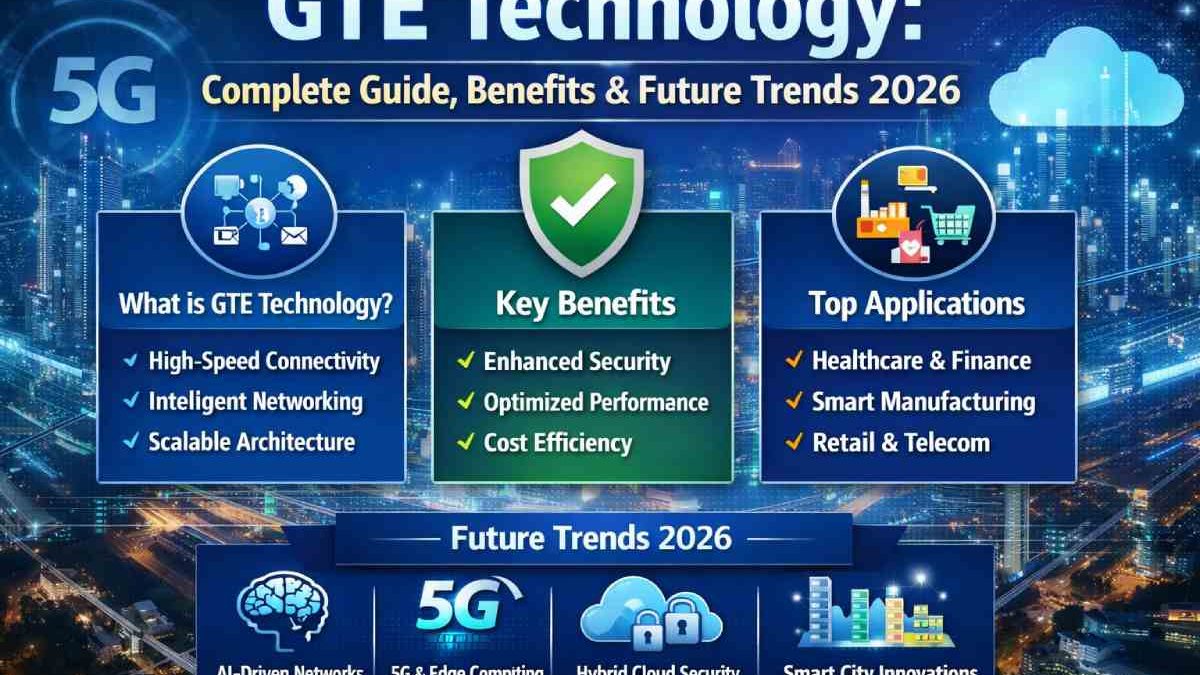
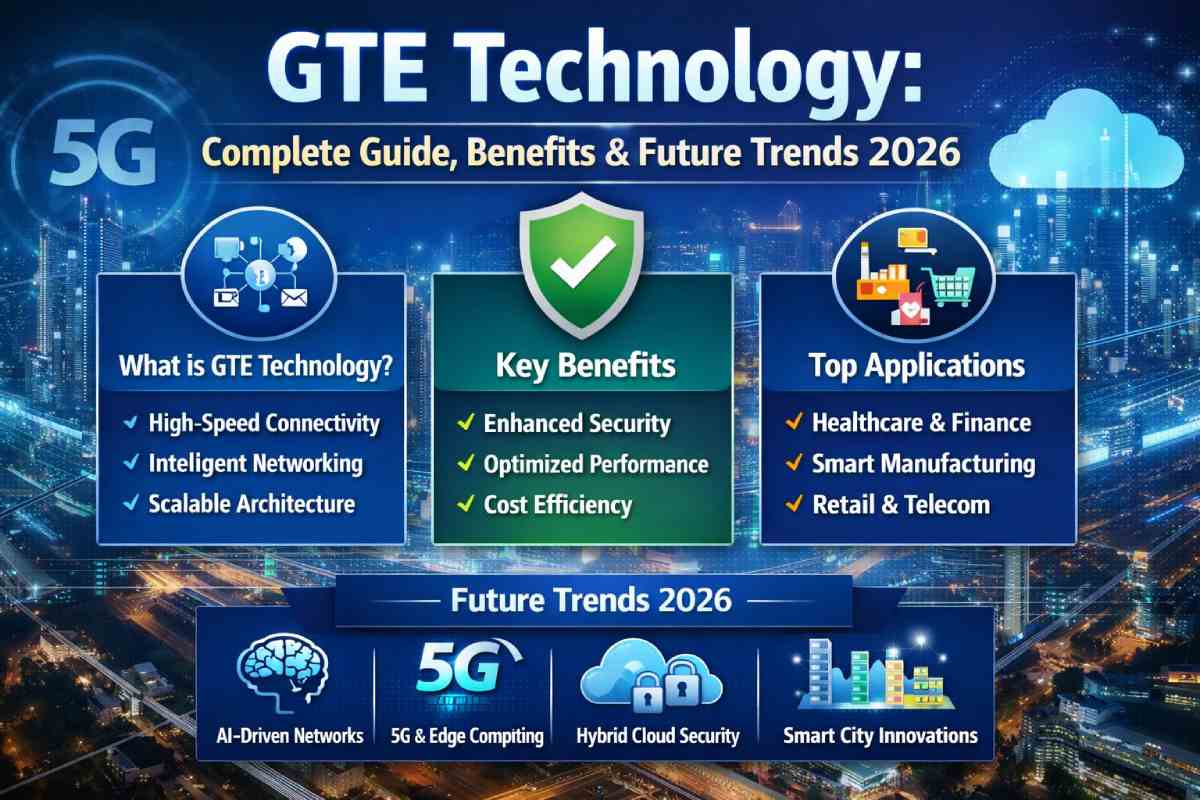
In the modern digital economy, businesses depend heavily on fast, reliable, and secure connectivity. As organizations adopt cloud computing, AI-powered platforms, IoT ecosystems, and remote collaboration tools, traditional networking infrastructure often struggles to keep up with the growing demands. This is where GTE Technology emerges as a transformative solution.
GTE Technology represents a modern approach to enterprise connectivity that integrates advanced networking architecture, intelligent data routing, high-speed communication frameworks, and scalable infrastructure. By combining cutting-edge technologies with adaptive networking principles, GTE Technology enables organizations to manage complex digital environments efficiently.
Enterprises today require seamless data transfer, real-time analytics, secure communication channels, and scalable network frameworks. GTE Technology addresses these needs by introducing smarter networking models that prioritize efficiency, automation, and performance.
This guide explores the concept of GTE Technology, its architecture, industry applications, and how it compares with traditional networking solutions. It also examines the future of GTE Technology and its expected impact on global digital infrastructure by 2026 and beyond.
What is GTE Technology?
GTE Technology refers to an advanced networking and communication framework designed to enhance enterprise connectivity, data processing, and system integration. The term is commonly associated with high-performance networking systems that enable efficient data transmission, intelligent traffic management, and scalable infrastructure deployment.
Unlike traditional networking systems that rely on static infrastructure and manual configuration, GTE Technology integrates automation, cloud integration, and adaptive routing mechanisms to optimize network performance.
At its core, GTE Technology focuses on improving three essential aspects of modern networking:
- Speed
- Scalability
- Security
Organizations implementing GTE Technology gain the ability to handle high data volumes, support distributed workforces, and maintain secure digital ecosystems.
Key Characteristics of GTE Technology
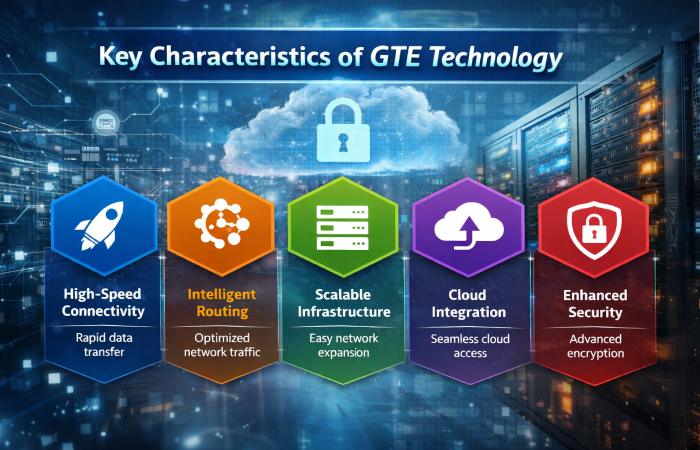
| Feature | Description |
| High-Speed Connectivity | Enables rapid data transfer across enterprise networks |
| Intelligent Routing | Uses automated systems to optimize network traffic |
| Scalable Infrastructure | Allows networks to expand easily without major redesign |
| Cloud Integration | Supports seamless connectivity with cloud platforms |
| Enhanced Security | Integrates modern encryption and monitoring tools |
Why Businesses Are Adopting GTE Technology
| Business Need | How GTE Technology Helps |
| Remote Work Infrastructure | Provides stable and secure connectivity |
| Cloud-Based Operations | Supports hybrid and multi-cloud environments |
| Data-Intensive Applications | Handles large data transfers efficiently |
| Cybersecurity Concerns | Implements advanced security protocols |
| Real-Time Communication | Enables fast and reliable communication channels |
As digital transformation accelerates globally, GTE Technology is becoming a foundational element of enterprise IT strategies.
The Evolution and Impact of GTE Technology
Networking technology has evolved significantly over the past few decades. Early enterprise networks were limited in speed, scalability, and flexibility. Organizations relied heavily on physical infrastructure and centralized systems that required significant maintenance and manual configuration.
The evolution toward GTE Technology was driven by the need for more dynamic and resilient networks capable of supporting modern digital ecosystems.
Key Stages in Networking Evolution
| Era | Networking Characteristics |
| 1990s | Basic LAN networks with limited bandwidth |
| Early 2000s | Expansion of internet-based business operations |
| 2010s | Rise of cloud computing and mobile connectivity |
| 2020s | Emergence of intelligent networking and GTE Technology |
Major Drivers Behind GTE Technology Adoption
| Driver | Explanation |
| Cloud Computing | Businesses moved infrastructure to cloud platforms |
| Internet of Things (IoT) | Billions of connected devices increased data flow |
| Artificial Intelligence | Required faster data processing and transfer |
| Remote Workforce | Demand for secure remote network access |
| Cybersecurity Threats | Necessitated stronger network protection mechanisms |
The impact of GTE Technology extends beyond improved connectivity. It also enables organizations to adopt digital transformation strategies that rely on real-time data access and high-speed communication.
Core Components and Architecture of GTE Technology
GTE Technology relies on a combination of advanced networking components that work together to create a highly efficient and intelligent infrastructure.
Core Components of GTE Technology
| Component | Function |
| Intelligent Routers | Optimize traffic flow and network efficiency |
| Software-Defined Networking (SDN) | Enables centralized network management |
| Edge Computing Nodes | Process data closer to the source |
| Network Automation Tools | Reduce manual network configuration |
| Security Gateways | Protect enterprise networks from threats |
Architecture Layers of GTE Technology
| Layer | Role in the System |
| Physical Layer | Includes hardware devices like routers and switches |
| Network Control Layer | Manages traffic routing and connectivity |
| Data Processing Layer | Handles real-time data analysis |
| Security Layer | Protects data integrity and network access |
| Application Layer | Supports enterprise applications and services |
This layered architecture allows GTE Technology to deliver both performance and flexibility across enterprise environments.
Applications and Use Cases for GTE Technology Across Industries
GTE Technology is being adopted across various industries to support digital transformation initiatives.
Industry Applications
| Industry | Use Case |
| Healthcare | Secure transmission of patient data and telemedicine services |
| Finance | High-speed transactions and fraud detection systems |
| Manufacturing | Smart factory networks and IoT device management |
| Retail | Real-time inventory tracking and customer analytics |
| Education | Remote learning platforms and digital classrooms |
| Telecommunications | Next-generation communication networks |
Benefits for Different Industries
| Benefit | Impact |
| Faster Data Transfer | Supports data-heavy operations |
| Reduced Network Downtime | Improves operational continuity |
| Enhanced Security | Protects sensitive information |
| Scalability | Allows organizations to grow their networks |
| Better Data Insights | Enables real-time analytics |
The flexibility of GTE Technology makes it suitable for both large enterprises and growing digital businesses.
Implementing GTE Technology for Enhanced Enterprise Connectivity
Organizations planning to adopt GTE Technology must follow a structured implementation strategy to ensure successful deployment.
Steps for Implementation
| Step | Description |
| Network Assessment | Evaluate existing infrastructure and requirements |
| Infrastructure Upgrade | Introduce compatible networking hardware |
| Cloud Integration | Connect enterprise systems with cloud platforms |
| Automation Deployment | Implement automated network management tools |
| Security Integration | Deploy advanced security frameworks |
Best Practices for Successful Deployment
| Practice | Explanation |
| Conduct Pilot Testing | Identify potential issues before full rollout |
| Train IT Teams | Ensure staff understand the new system |
| Monitor Network Performance | Use analytics tools for optimization |
| Implement Redundancy | Prevent network failures |
| Continuously Update Security | Protect against evolving cyber threats |
Enterprises that follow these strategies can maximize the benefits of GTE Technology.
GTE Technology vs. Traditional Networking: A Comparison
To understand the value of GTE Technology, it is helpful to compare it with traditional networking models.
Key Differences
| Feature | GTE Technology | Traditional Networking |
| Network Management | Automated and centralized | Manual configuration |
| Scalability | Highly scalable | Limited scalability |
| Performance | High-speed data transmission | Moderate performance |
| Security | Advanced integrated security | Basic protection mechanisms |
| Flexibility | Supports hybrid environments | Mostly static infrastructure |
Advantages of GTE Technology
| Advantage | Impact |
| Faster Network Speeds | Improves application performance |
| Reduced Operational Costs | Automation lowers maintenance costs |
| Enhanced Security | Protects critical data assets |
| Future-Proof Infrastructure | Supports emerging technologies |
| Improved User Experience | Faster and more reliable connectivity |
Organizations seeking digital agility are increasingly shifting toward GTE Technology solutions.
The Future of GTE Technology: Trends and Predictions for 2026
As digital ecosystems continue expanding, GTE Technology is expected to play a central role in shaping the future of networking.
Key Trends
| Trend | Description |
| AI-Powered Network Management | Automated systems will optimize network performance |
| 5G and Beyond | Faster wireless connectivity will integrate with GTE frameworks |
| Edge Computing Growth | More processing will occur near data sources |
| Cybersecurity Integration | Networks will incorporate built-in threat detection |
| Hybrid Cloud Expansion | Enterprises will rely on multi-cloud networking solutions |
Market Outlook
| Factor | Expected Impact |
| Enterprise Digital Transformation | Increased demand for advanced networking |
| Smart Cities | Large-scale connected infrastructure |
| Autonomous Systems | Require real-time communication networks |
| IoT Expansion | Billions of connected devices needing efficient networks |
By 2026 and beyond, GTE Technology could become a foundational element of global digital infrastructure.
Conclusion
GTE Technology represents the next generation of enterprise networking solutions designed to meet the demands of modern digital ecosystems. With its focus on high-speed connectivity, intelligent traffic management, scalable architecture, and integrated security, GTE Technology offers significant advantages over traditional networking models.
FAQ
What does GTE Technology mean?
GTE Technology refers to an advanced networking framework designed to improve enterprise connectivity, data transfer speeds, and network security.
Why is GTE Technology important?
It helps organizations manage complex digital environments, supports cloud infrastructure, and enables high-speed data communication.
Which industries use GTE Technology?
Industries such as healthcare, finance, telecommunications, manufacturing, retail, and education use GTE Technology.
How does GTE Technology improve network performance?
It uses intelligent routing, automation, and scalable architecture to optimize data flow and reduce network congestion.
What is the future of GTE Technology?
The future includes AI-driven networking, integration with 5G networks, increased edge computing adoption, and stronger cybersecurity frameworks.