
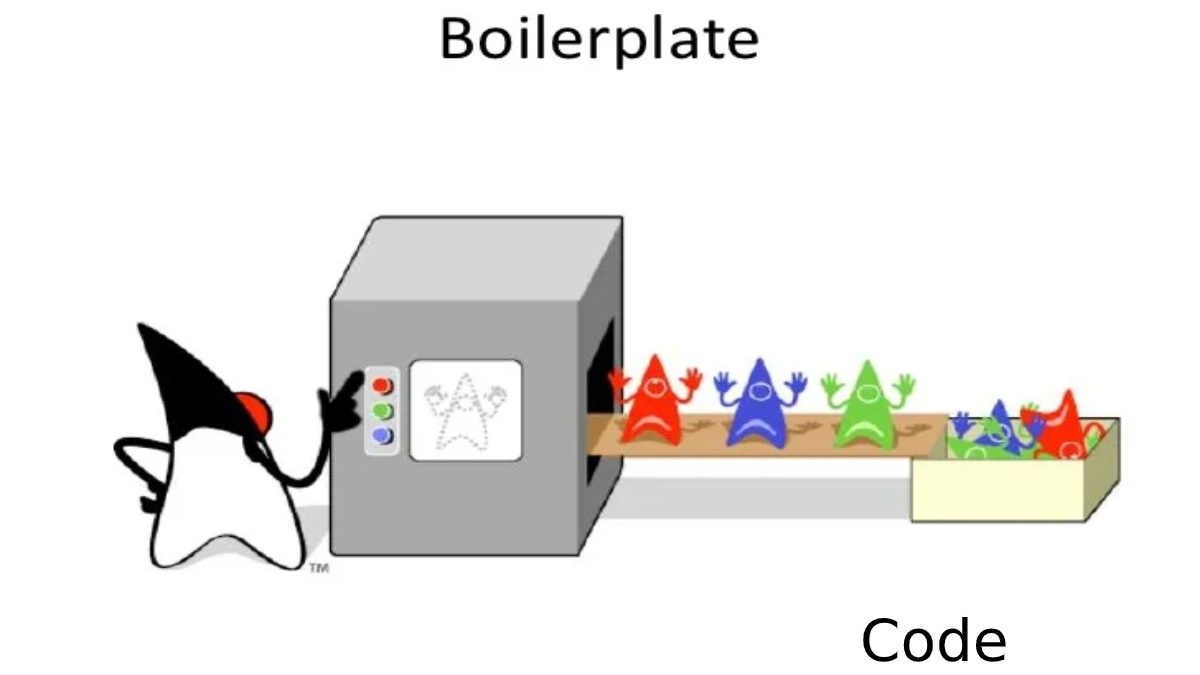
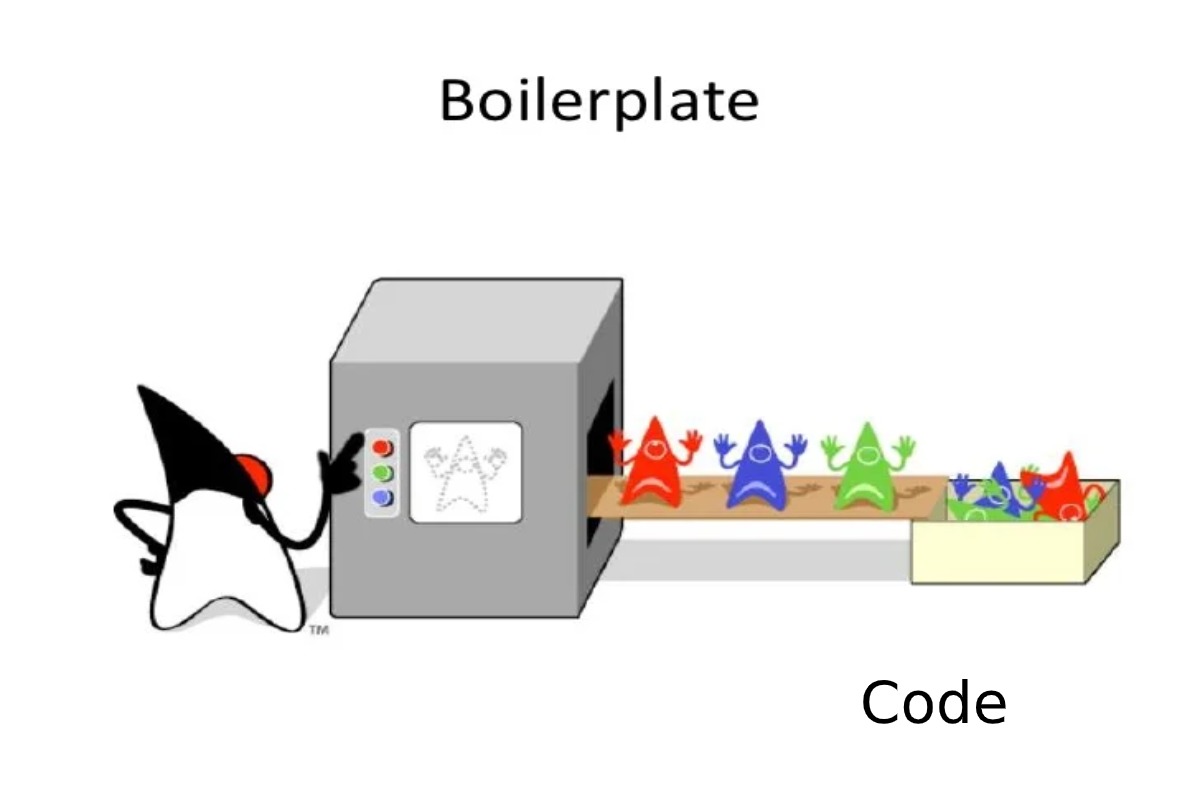
A boilerplate code is a standard piece of code that can be reused in different projects with only a few modifications or, in some cases, without any changes at all. It provides developers with a ready-made foundation so they do not have to write the same basic code repeatedly.
The term “boilerplate” is also commonly used outside programming. For example, legal documents such as privacy policies, terms and conditions, contracts, and agreements often contain standard sections that can be reused for different situations. In programming, the concept is similar: developers reuse standard code structures to save time and maintain consistency.
This Article Belongs to Tech Guides
Table of Contents
What is Boilerplate Code?
In computer programming, boilerplate code refers to a piece of code that can be used by multiple developers or across multiple projects with minimal changes.
Developers frequently need to complete tasks quickly, particularly in professional software development environments. Writing the same basic structures from scratch for every project can consume unnecessary time. Boilerplate code solves this problem by providing a standard starting point.
For example, a C++ programmer using an Integrated Development Environment (IDE) may receive a basic code structure when creating a new project. The programmer can then modify that structure according to the application’s requirements.
Boilerplate code does not necessarily perform the main function of an application. Instead, it establishes the basic structure required for the application to work correctly.
Why Use Boilerplate Code?
The primary advantage of boilerplate code is reusability. Instead of repeatedly writing standard code, developers can reuse an existing structure and concentrate on the application’s unique functionality.
Some important benefits include:
- Saves development time: Developers can start with an existing structure instead of creating everything from scratch.
- Improves consistency: Similar projects can follow the same coding structure and conventions.
- Reduces repetitive work: Developers do not need to repeatedly write standard functions and declarations.
- Provides a reliable starting point: A tested boilerplate can help developers avoid basic structural mistakes.
- Makes maintenance easier: Standardised code can be easier for development teams to understand and maintain.
- Speeds up development: Less time spent on repetitive coding allows developers to focus on important application features.
Boilerplate is especially useful when developers work on projects that share similar technical requirements.
Examples of Boilerplate Code
Boilerplate code appears in many programming languages and development environments. Some common examples include HTML documents, object-oriented programming structures, frameworks, and programming-language declarations.
Boilerplate Code in HTML
HTML is a markup language used to create the basic structure of web pages. Developers commonly begin with a standard document structure containing elements such as DOCTYPE, html, head, and body. You can learn more about basic HTML syntax from MDN Web Docs.
A typical HTML document includes elements such as DOCTYPE, html, head, and body. Developers can use this basic structure and then add the content and elements required for a particular page.
The standard HTML structure is therefore a good example of boilerplate because much of it does not change between ordinary web pages.
Developers can then add headings, paragraphs, images, links, forms, scripts, and other elements inside the standard structure.
Boilerplate in Object-Oriented Programming
Boilerplate is also common in object-oriented programming (OOP). In OOP, a class generally contains variables, methods, constructors, getters, setters, and other components.
For example, a developer creating a Car class may use a standard class structure containing properties such as the model, colour, and speed. Getter and setter methods may follow a similar pattern across many classes.
Although the actual property names and business logic can change, the overall structure can remain similar. This makes repetitive class structures a form of boilerplate code.
Boilerplate in Frameworks
Modern programming frameworks make extensive use of predefined structures. Frameworks provide developers with established patterns, directories, configuration files, libraries, and components that simplify application development.
For example, PHP developers can work with frameworks such as CodeIgniter, Laravel, and CakePHP. Python developers may use Django or Flask, while JavaScript developers can work with frameworks and libraries such as Angular and Express. Ruby developers can use Ruby on Rails.
CodeIgniter, for example, follows the Model-View-Controller (MVC) architecture. Its predefined project structure gives developers an organised foundation for creating applications. Instead of building every component manually, developers can work within the framework’s established structure.
This approach allows teams to concentrate more on application-specific functionality rather than repeatedly creating basic infrastructure.
Boilerplate and the Preamble
Some programming languages contain declarations that appear at the beginning of a program. These statements may not represent the application’s main logical functionality, but they are necessary for the program to compile or access particular features.
C++ provides a familiar example. A program may begin with a preprocessor directive such as:
#include <iostream>
The #include directive tells the preprocessor to include the contents of a specified header file. The iostream header provides functionality for input and output operations, such as using std::cout and std::cin.
Preprocessor directives begin with the # symbol. They are processed before the main compilation stage.
A header can generally be included in two common ways:
#include <file-name>
This form is commonly used for standard or system-provided header files.
#include “file-name”
This form is commonly used when including a developer’s own header file or another project-specific file.
Another familiar C++ statement is:
using namespace std;
It allows developers to use names from the standard namespace without repeatedly writing the std:: prefix. For example, instead of writing:
std::cout
a program using the directive can write:
cout
These declarations can become part of the standard starting structure used in many C++ programs.
Boilerplate Code in Modern Development
Boilerplate is not limited to traditional programming examples. Modern web development, software platforms, APIs, content-management systems, and application frameworks frequently provide templates and reusable structures.
Developers can also use ready-made components when creating websites and digital platforms. For example, developers researching different online platforms or technology services may encounter standard page structures, authentication components, API configurations, and reusable interface elements.
Technology-related projects can also involve integrations with entertainment and digital services. Articles discussing platforms such as Bralad.com or streaming TV services demonstrate how different digital platforms rely on underlying software systems and reusable technical components.
Similarly, software development can involve specialised digital experiences and applications. Technical resources covering subjects such as Mandalorian armour or other technology-related topics can provide examples of how software, digital media, and online platforms intersect.
Conclusion
Boilerplate code is an important concept in software development because it reduces repetitive programming work and provides developers with a consistent starting point. From HTML document structures and C++ declarations to object-oriented classes and modern frameworks, reusable code appears throughout the development process.
Using boilerplate does not mean that every project should contain identical code. Instead, developers can take a proven structure and modify it according to the project’s specific requirements.
When used correctly, boilerplate can save time, improve consistency, simplify maintenance, and allow developers to focus more of their effort on creating useful features and solving application-specific problems. Additional technical resources and examples, including H9QT1G6DN6 and H9TQ52ACLTMC, can also help readers explore related technology concepts.